A grinding sound when you open the door. A loud bang in the middle of the night. A persistent squeal every time you leave for work. These aren’t just annoying background noises — they’re your garage door’s way of telling you something is wrong. Most homeowners ignore these sounds until the door stops working entirely, but by then, a simple repair has often turned into a costly replacement.
Understanding what your garage door is trying to tell you can help you catch problems early, avoid dangerous failures and save money in the long run.
What Squeaking and Squealing Sounds Mean
Squeaks, squeals and whines are the most common complaints we hear from homeowners. While these high-pitched sounds might seem like minor annoyances, they’re actually early warning signs that metal components are rubbing together in ways they shouldn’t. The longer you ignore these noises, the faster those parts will wear down and fail.
The primary causes of squeaking and squealing:
- Lack of lubrication: When metal parts move against each other without proper lubrication, friction builds up and creates that distinctive squeaking sound. Many homeowners reach for WD-40 as a quick fix, but that’s a mistake. WD-40 is a water displacer, not a lubricant, and it attracts dirt and grime, worsening the problem over time. Professional technicians use silicone or lithium-based lubricants specifically designed for garage doors that reduce friction without collecting debris.
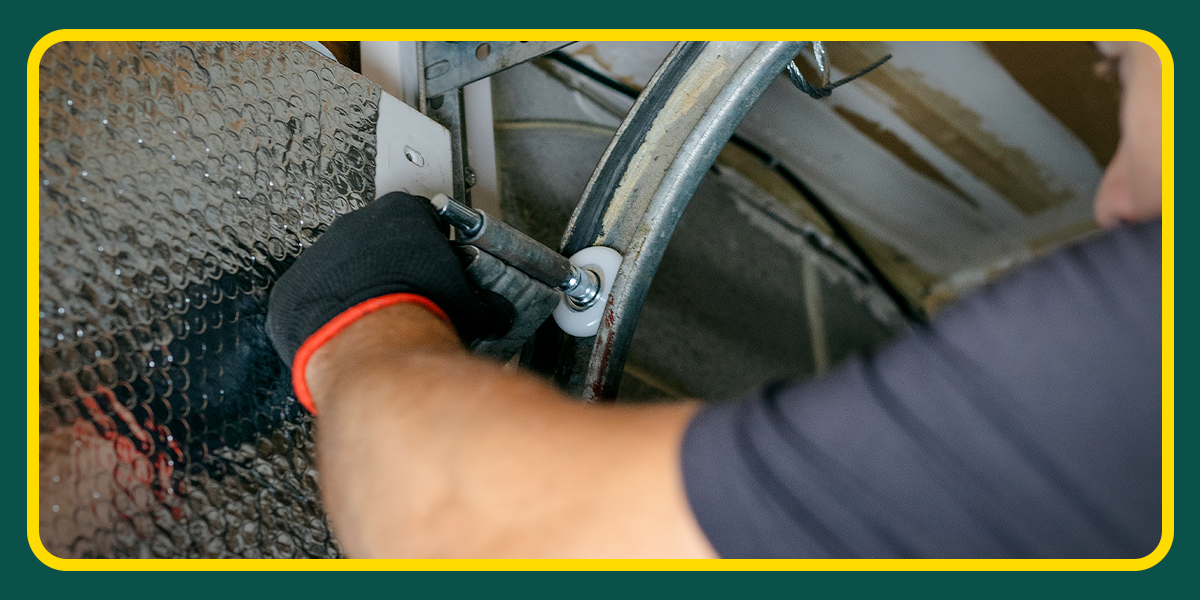
- Worn rollers: Garage door rollers are designed to roll smoothly along the tracks, but over time, they can wear down and develop flat spots. When that happens, the rollers stop rolling and start scraping against the track, creating a high-pitched squeal or a grinding sound whenever the door moves. If you’re hearing this noise, you likely need to replace worn or damaged rollers before they damage your tracks.
- Loose or damaged hinges: Hinges connect the panels of your garage door and allow it to bend as it moves along the curved track. When these hinges become loose or worn, they can cause squeaking or creaking. Loose hinges also put extra stress on other components, which can lead to more serious problems down the line.
Signs of Broken Garage Door Springs or Cables
If you’ve ever heard a loud bang coming from your garage, you’ve likely experienced a broken torsion spring. A loud bang is the most urgent type of garage door noise because it signals an immediate safety hazard. Never ignore sudden, loud sounds.
What causes these alarming noises? Torsion springs do the heavy lifting for your garage door. They’re wound tight and store energy that counterbalances the door’s weight, making it easy to lift. These springs are typically rated for about 10,000 cycles, which translates to roughly seven to 10 years of normal use for most homeowners.
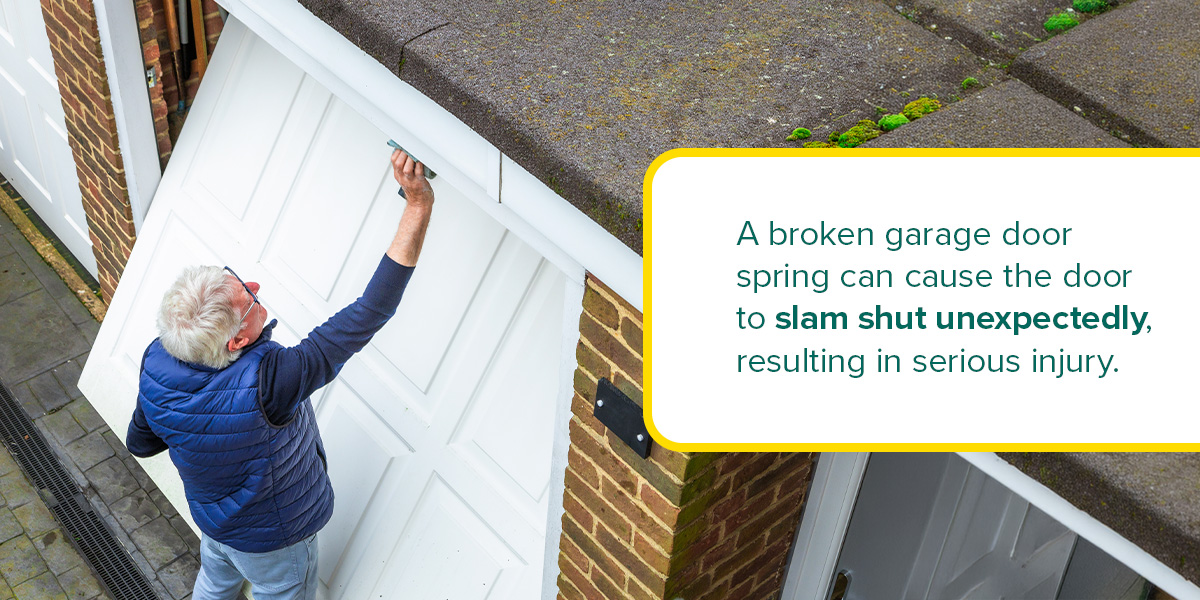
When a spring reaches the end of its lifespan and breaks, it releases all that stored energy at once with a sound like a gunshot. A broken garage door spring can cause the door to slam shut unexpectedly, resulting in serious injury. The Door and Access Systems Manufacturers Association (DASMA) identifies broken springs as one of the most dangerous garage door failures, and according to its safety guidelines, only trained technicians who have the proper tools and safety equipment should repair broken springs.
Cables work with springs to safely lift and lower your door. When these cables start to fray or break, they can make a loud popping or snapping sound. You might also notice the door hanging crookedly or one side dropping lower than the other. When cables become damaged, they need immediate attention, as a complete break can cause the door to fall without warning.
Why Your Garage Door Rattles, Grinds or Hums During Operation
Consistent vibrations and ongoing sounds during operation usually point to loose hardware or problems with the opener mechanism. These noises might not seem as urgent as a loud bang, but they still indicate issues that need professional attention.
Common causes of rattling, grinding and humming include:
- Loose hardware: Every time your garage door opens and closes, it creates vibration. Over time, that constant movement can loosen nuts, bolts and brackets throughout the system. When hardware becomes loose, it rattles and clanks as the door moves. While this might seem like a simple fix, it’s important to have a professional tighten everything properly — over-tightening can strip threads or crack components.
- Debris in tracks: Small stones, dirt and other debris can accumulate in your garage door tracks. When the rollers pass over this debris, it creates a grinding sound. Keeping your tracks clean is part of regular maintenance, but if grinding persists after cleaning, the tracks may be bent or misaligned.
- Failing opener motor: If your garage door opener makes a constant humming or buzzing sound, but the opener struggles or fails to lift the door, the motor may be straining or failing. The motor can struggle if the door is too heavy for the opener due to broken springs, the motor is wearing out or internal gears are damaged. A professional can diagnose whether you need garage door opener repair or replacement.
The Risks of Ignoring Garage Door Noise
A noisy garage door is more than an annoyance — it’s dangerous. Ignoring these warning signs can lead to consequences that go far beyond the inconvenience of a stuck door.
When you put off repairs, you’re increasing the likelihood of a sudden, complete failure at the worst possible time. A spring that breaks while you’re backing out of the garage can trap your car. A door that falls unexpectedly can cause serious injury or property damage. These aren’t just theoretical risks — they happen to homeowners every day.
Delaying repairs also leads to more expensive secondary damage. A worn roller that you ignore today can gouge your track tomorrow, turning a simple roller replacement into a track repair as well. A loose hinge can put extra stress on other hinges and springs, causing them to fail prematurely. What starts as a minor repair can quickly escalate into a major expense.
Finally, a malfunctioning garage door compromises your home’s security. A door that doesn’t close properly or that struggles to open and close is an invitation to intruders. The best time to address garage door noise is the moment you first notice it.
Schedule Same-Day Garage Door Repair in Charleston
At Southeastern Garage Doors, our technicians have 100 years of combined experience diagnosing and fixing residential garage door problems throughout Charleston, and we’ve learned one thing — every noise has a meaning. We offer same-day service throughout the Charleston area, so you can get a professional diagnosis and repair before a small problem becomes a safety hazard. Our technicians have the experience and tools to identify the source of any garage door noise and fix it right the first time.
Whether you’re hearing squeaks, grinding or a loud bang, we’re here to help. Call us at (843) 747-6622 to request same-day service or learn more about our professional garage door repair solutions.