
The average single garage door can weigh anywhere between 100 and 200 pounds. With that much weight and hardware in motion, it’s no surprise that even a reliable system can get stuck from time to time. Fortunately, many of the most common causes of a stuck garage door are surprisingly simple to diagnose. Here’s how to identify what’s really going on.
First, Check These Simple Fixes
Before diving into mechanical issues, start by checking the basics. Many times, a garage door that’s stuck ultimately comes down to an accidental button press, a flipped switch or a power issue.
Use the following quick checklist to rule out the easy stuff:
1. Make Sure the Door Isn’t Manually Locked
Most garage doors include a manual lock — typically a knob or handle in the center of the door with two horizontal bars that slide into the track. It’s sometimes engaged accidentally, for example, by someone bumping or brushing against it.
To check it, look for a handle on the inside of the door. If the bars are extended into the tracks, turn the handle to retract them. Once disengaged, the opener should be able to lift the door normally.
2. Confirm That Your Opener Has Power
A loss of power is one of the most common reasons a garage door won’t open. It’s also one of the easiest problems to fix. Look for the following:
- The outlet: Confirm the opener’s plug hasn’t been knocked loose.
- The circuit breaker: If the breaker has tripped, try resetting it.
- The ground fault circuit interrupter (GFCI): Garages often have GFCI outlets that can trip easily. Press the “reset” button if yours has been triggered.
3. Test Your Remote and Wall Switch Batteries
This is another simple but often overlooked cause for a garage door that won’t move up or down. If the remote or wall button won’t work, try swapping in fresh batteries or testing with a backup remote.
Inspect Your Garage Door’s Safety Sensors
If the basics check out, the next most common culprit is the photo-eye safety sensors. If the sensors aren’t working properly, the door will start to close, then immediately stop and reverse to the open position.
Here’s what to do:
- Check for obstructions: Anything blocking the invisible beam between the sensors will cause the door to stop or reverse. Look for things like boxes, rakes, leaves or other items. Clear away anything in the sensor’s path, then try closing the door again.
- Clean the sensor lenses: Photo eyes sit low on the garage door tracks, which makes them magnets for dirt, dust and spider webs. Use a soft cloth to gently wipe each lens. Avoid using abrasive cleaners — a simple microfiber cloth works best.
- Look for alignment issues: Each sensor has a small LED light. A solid light means it’s aligned, whereas a light that’s blinking or off indicates the sensor is misaligned. Gently adjust the sensors until both lights are solid. If they won’t stay aligned, the mounting brackets may be bent or loose.
Common Garage Door Problems and Solutions
If your door still won’t move, you may be dealing with a mechanical issue. Let’s look at the most common culprits to learn what’s safe for you to check and what should be left to a professional.
Obstructed or Damaged Garage Door Tracks
A stuck door may simply be unable to move along its tracks. Over time, garage door tracks can accumulate dirt, leaves or other debris. Living in coastal environments like Charleston adds an extra layer of challenge — sand, salt and humidity can cause corrosion or create gritty buildup inside the tracks.
Look along each track for debris or visible dents. Minor dirt can be gently wiped away with a cloth. If you notice bent metal, rust or misalignment, it’s best to leave repairs to a technician.
Worn or Broken Rollers
Rollers help guide the doors smoothly through the tracks. When they wear out, they can produce grinding or squealing noises, jerky or uneven movement and a door that gets stuck partway. If rollers look cracked, loose or excessively worn, they may need to be replaced.
Broken Torsion or Extension Springs
Garage door springs are the system’s main lifting force. They carry most of the door’s weight, so the opener doesn’t have to. When a spring breaks, the door becomes extremely heavy, making it hard to lift.
Signs of a broken spring include:
- A loud bang
- A door that only lifts a few inches before stopping
- A visible gap in the torsion spring above the door
Spring repair is never a do-it-yourself (DIY) job. Springs store an enormous amount of tension, and improper handling can cause severe injury and more damage to the door. This is a job for trained professionals only.
Frayed or Snapped Cables
Cables work alongside the springs to raise and lower the door safely. Over time, they can fray or snap. You might notice loose strands of cable, uneven door movement or a door that’s jammed or hanging crooked.
Like springs, cable repair is dangerous. If damaged or broken cables are the cause of a stuck garage door, repair should always be handled by a technician.
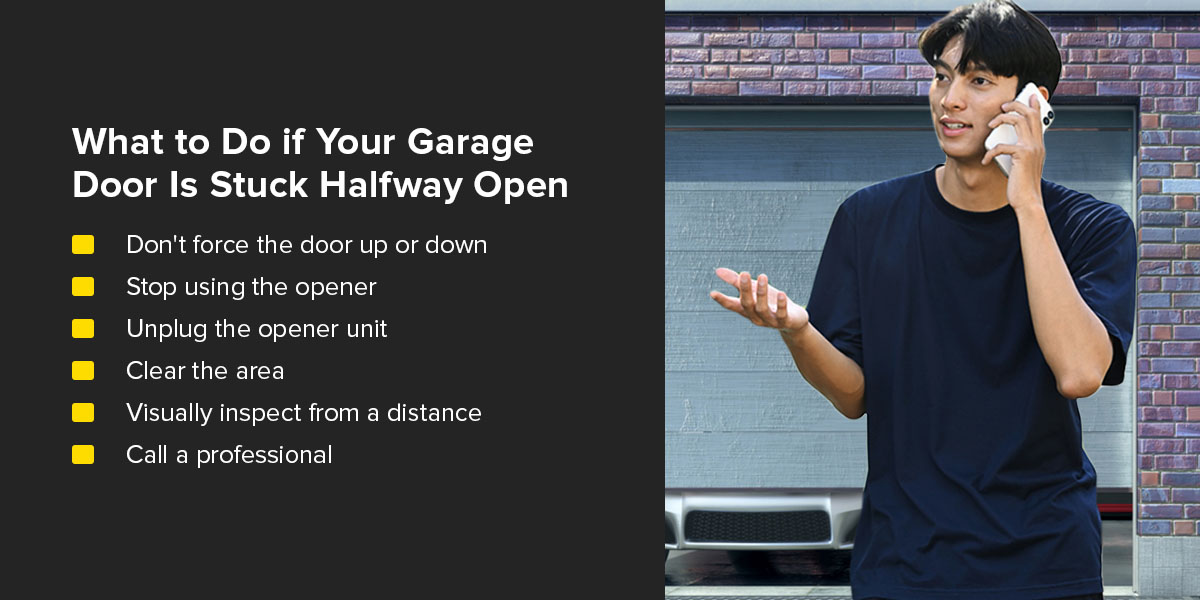
What to Do if Your Garage Door Is Stuck Halfway Open
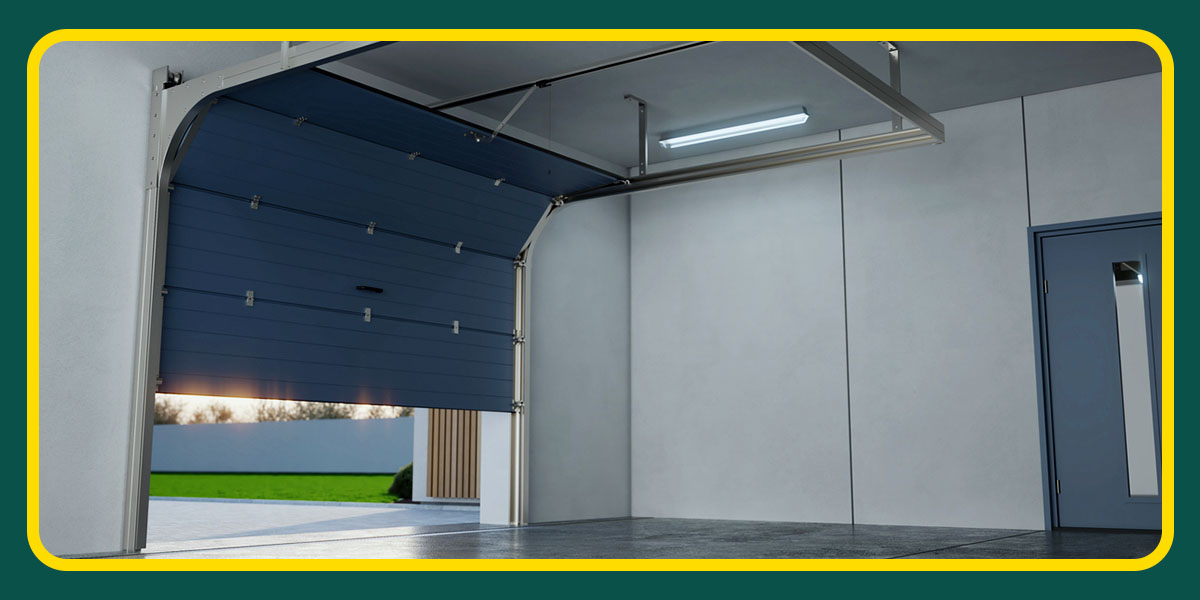
A door stuck halfway is frustrating and potentially dangerous. In most cases, if your garage door won’t close, it’s a sign of worn rollers, damaged tracks or failing springs.
Here’s how to handle it safely:
- Don’t force the door up or down: You could damage the opener, tracks and rollers or cause the door to slam shut.
- Stop using the opener: Immediately stop pressing the remote or wall switch.
- Unplug the opener unit: Disconnect the motor from the power source to prevent accidental activation.
- Clear the area: Move cars, objects and people away from the garage door opening.
- Visually inspect from a distance: Look for obvious obstructions on the tracks or bent parts, but do not touch anything. The components are under high tension.
- Call a professional: This is the safest and most effective way to secure the door. A trained technician can diagnose the problem and safely lower or repair it.
When to Call a Professional for Your Stuck Garage Door
If the problem isn’t related to power, dead batteries, a tripped sensor or a simple obstruction, it’s time to call for service.
Contact a professional if:
- The door keeps sticking repeatedly.
- You notice damaged hardware.
- You hear unusual noises.
- You’re unsure what the issue is.
Springs, cables and heavy door components all carry risks when handled improperly. Professional repairs keep you safe and prevent small problems from turning into major, more costly ones.

Get Expert Garage Door Service in Charleston
If your door is jammed, half-open or making strange noises, an expert can help you pinpoint the cause and get it back up and running safely and reliably with professional repairs.
For homeowners in the Lowcountry, Southeastern Garage Doors is the trusted local source for residential garage door services. From diagnostics to repairs, replacements and maintenance, our experienced team knows how to keep your door moving smoothly.
Reach out to Southeastern Garage Doors to schedule your same-day garage door service.